

 Image 1 of 1
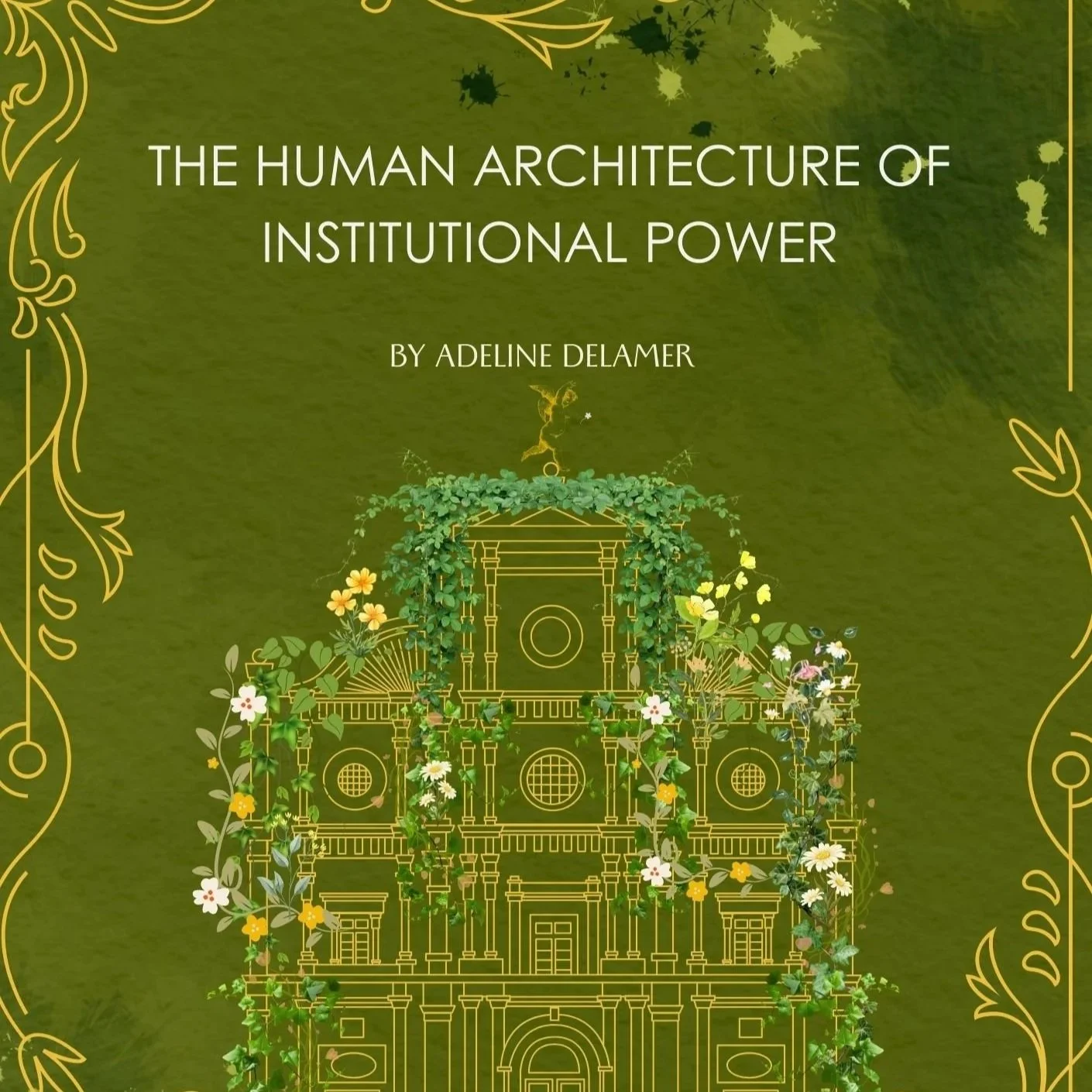
The Human Architecture of Institutional Power: Designing and Leading Humane Systems in the Next Era of Governance
The Human Architecture of Institutional Power
Book Three in the On Governance Series
The On Governance Series traces the interior life of power. It follows the movement from the individual conscience to the moral mind, then to the architecture that shapes collective decisions. Each book stands alone. Together they offer a clear education in how power forms, fractures, and restores itself.
On Grace and Wholeness opened the series with the inner ground. The book showed how a leader becomes whole enough to guide others without distortion.
The Moral Intelligence Framework mapped the emotional and ethical mechanics of decision making. It gave language to the quiet forces that shape judgment.
On Integrity explored what breaks inside a person and an institution when truth is betrayed. It showed how repair becomes possible through courage and clarity. It is the underlying principle throughout the series.
The Human Architecture of Institutional Power brings the series to its structural depth. This book studies institutions the way a physician studies the body. It maps culture as skin and structure as the skeleton. It looks at capability as muscle and coordination as connective tissue. It explains why some organizations thrive and others collapse. The author walks the reader through every system. Nervous, ethical, circulatory, emotional, cognitive. Each chapter offers a treatment protocol that shows how an institution can heal, mature, and regain its strength.
The book also expands outward into the public systems that shape a society. It guides the reader through what it takes to repair justice, politics, education, media, health care, diplomacy, and security. The tone remains steady and contemplative. The goal is to give leaders something rare. A clear way of seeing the hidden anatomy of power. A language for what they always sensed but never had the words for.
This is not a business manual. It is a companion for people who carry responsibility. It is written for founders, managing partners, public servants, and anyone who must hold the weight of decisions that affect others. The book offers a form of structural literacy. It shows how power can be built with clarity and governed with conscience.
The Human Architecture of Institutional Power
Book Three in the On Governance Series
The On Governance Series traces the interior life of power. It follows the movement from the individual conscience to the moral mind, then to the architecture that shapes collective decisions. Each book stands alone. Together they offer a clear education in how power forms, fractures, and restores itself.
On Grace and Wholeness opened the series with the inner ground. The book showed how a leader becomes whole enough to guide others without distortion.
The Moral Intelligence Framework mapped the emotional and ethical mechanics of decision making. It gave language to the quiet forces that shape judgment.
On Integrity explored what breaks inside a person and an institution when truth is betrayed. It showed how repair becomes possible through courage and clarity. It is the underlying principle throughout the series.
The Human Architecture of Institutional Power brings the series to its structural depth. This book studies institutions the way a physician studies the body. It maps culture as skin and structure as the skeleton. It looks at capability as muscle and coordination as connective tissue. It explains why some organizations thrive and others collapse. The author walks the reader through every system. Nervous, ethical, circulatory, emotional, cognitive. Each chapter offers a treatment protocol that shows how an institution can heal, mature, and regain its strength.
The book also expands outward into the public systems that shape a society. It guides the reader through what it takes to repair justice, politics, education, media, health care, diplomacy, and security. The tone remains steady and contemplative. The goal is to give leaders something rare. A clear way of seeing the hidden anatomy of power. A language for what they always sensed but never had the words for.
This is not a business manual. It is a companion for people who carry responsibility. It is written for founders, managing partners, public servants, and anyone who must hold the weight of decisions that affect others. The book offers a form of structural literacy. It shows how power can be built with clarity and governed with conscience.